
Power supplies & chargers for amateur radio
Amateur Radio kit lives or dies by the quality of its DC rails. Receiver noise floors on HF (1.8–30 MHz) sit only a few dB above thermal noise, so any switching hash, ripple or earth-loop hum shows up immediately as S-meter creep and degraded weak-signal copy. The Mascot range gives you two paths: traditional linear AC/DC supplies (8421, 6823, 2083, 2183) where every watt of receive sensitivity counts, and quiet filtered switch-mode units for QRP, portable and digital-mode work where weight and efficiency dominate. For the battery side of the station - handheld NiMH packs, SLA station batteries and modern LiFePO4 portable packs - Mascot's 2040, 2240, 8314 and 4040 chargers cover everything from 60 mA trickle to 5 A bulk, with the correct chemistry profile in every case. Everything ships from UK stock at Pulsar Developments with the CE/UKCA paperwork your club station or club exam centre may need.
What to look for
- Output voltage suited to the rig: nominal 12V DC for handhelds and accessories, 13.8V nominal for 100W HF transceivers (Mascot's 9970 24V→13.8V DC/DC is a clean way to derive this from a 24V rail)
- Continuous current rating matched to transmit duty - 22–25A for a 100W SSB HF rig, 4–8A for a 25W mobile, 1–3A for accessories
- Low ripple and broadband EMI - linear regulation is the safe choice on sensitive HF receive; modern filtered switch-mode is usually fine on VHF/UHF
- Short-circuit, over-current and over-temperature protection that recovers automatically when the fault clears
- Correct charger chemistry for any station batteries (SLA, NiMH or LiFePO4 - never substitute one for another)
- UK 3-pin mains lead, CE/UKCA marked, with a 1-year manufacturer warranty
Recommended Mascot Models
Curated from our UK stock for amateur radio use. Need help picking? Call 01189 795319 or request a quote.
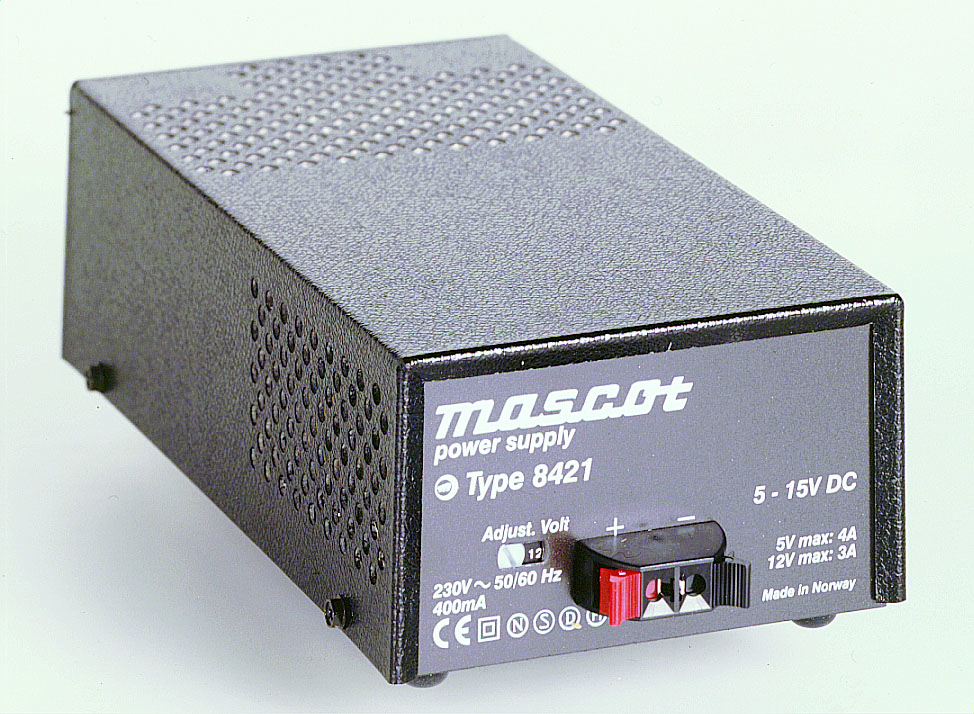
Mascot 8421 12V-30V DC, 36W AC/DC Linear power supply with fixed EU mains cord and snap connectors
£120.67 + VAT£144.80 Inc. VAT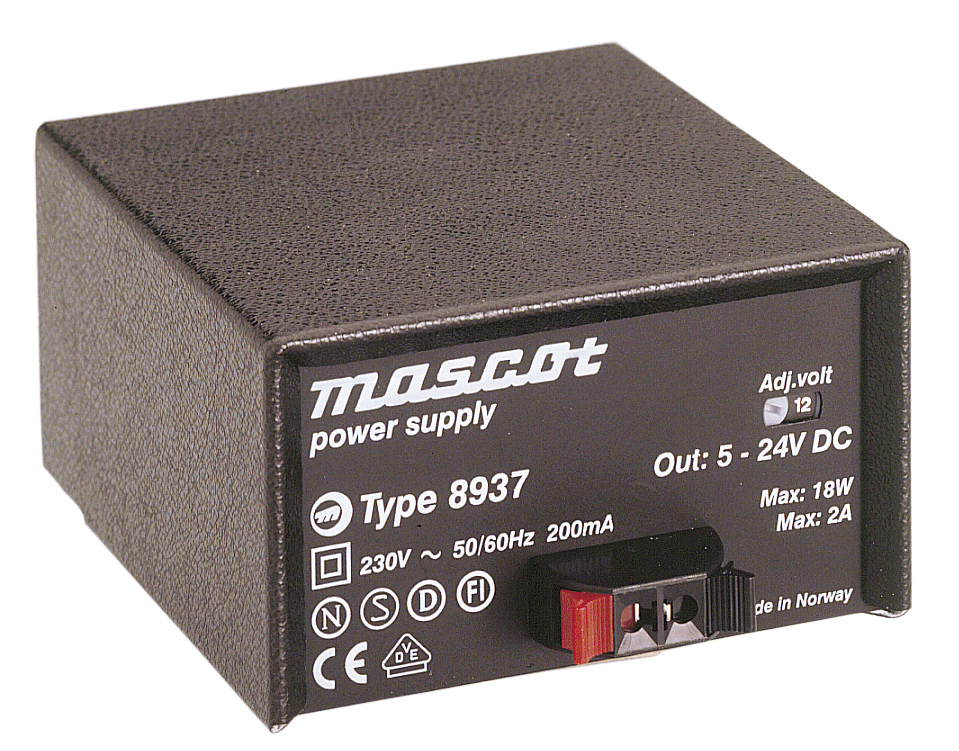
Mascot 8937 5-24V DC, 18W AC/DC Linear power supply with fixed EU mains cord and snap connectors
£89.57 + VAT£107.48 Inc. VAT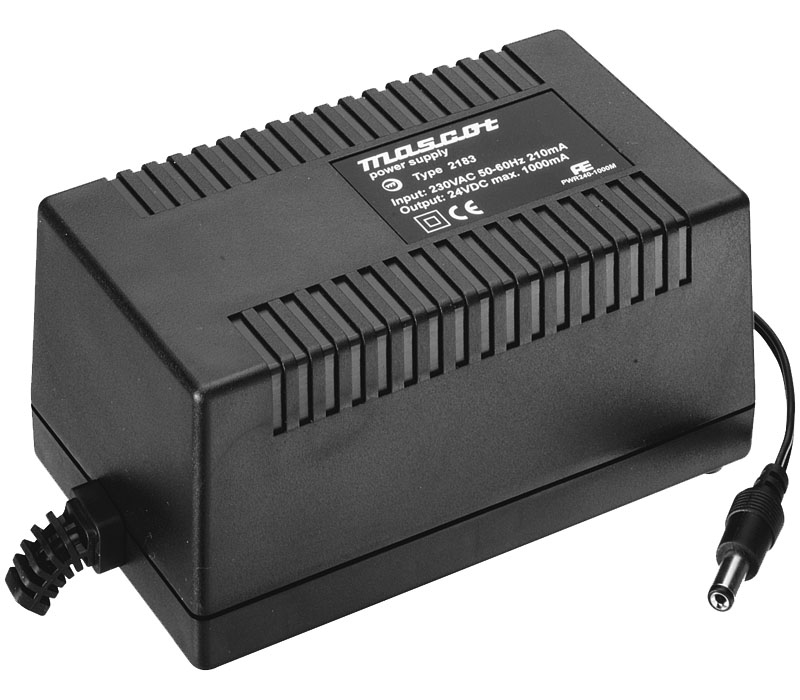
Mascot 2183 24V DC, 24W AC/DC Linear power supply with UK Plug
£51.84 + VAT£62.21 Inc. VAT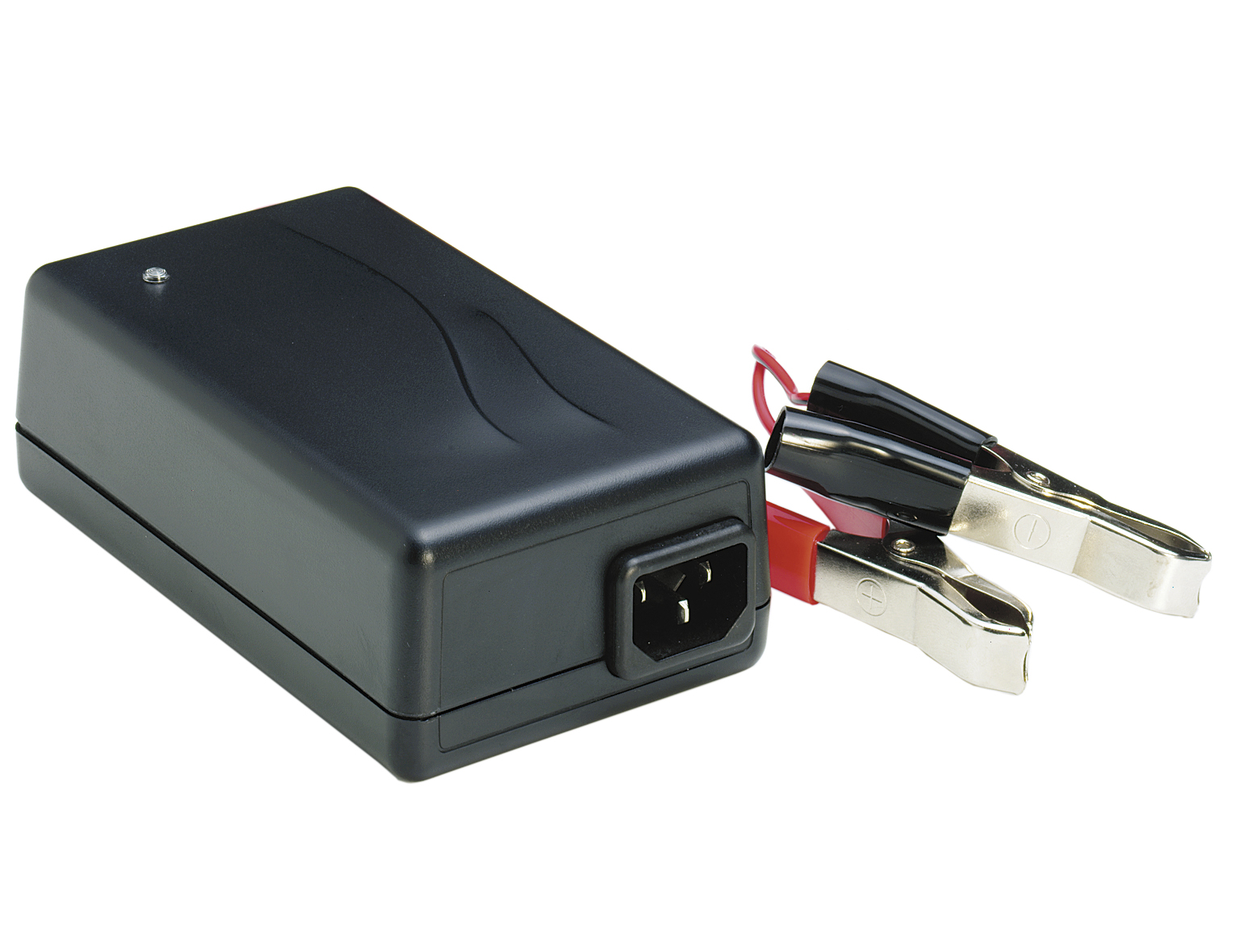
Mascot 2040 12V/4A 3-Step SLA Battery Charger with timer
£82.10 + VAT£98.52 Inc. VAT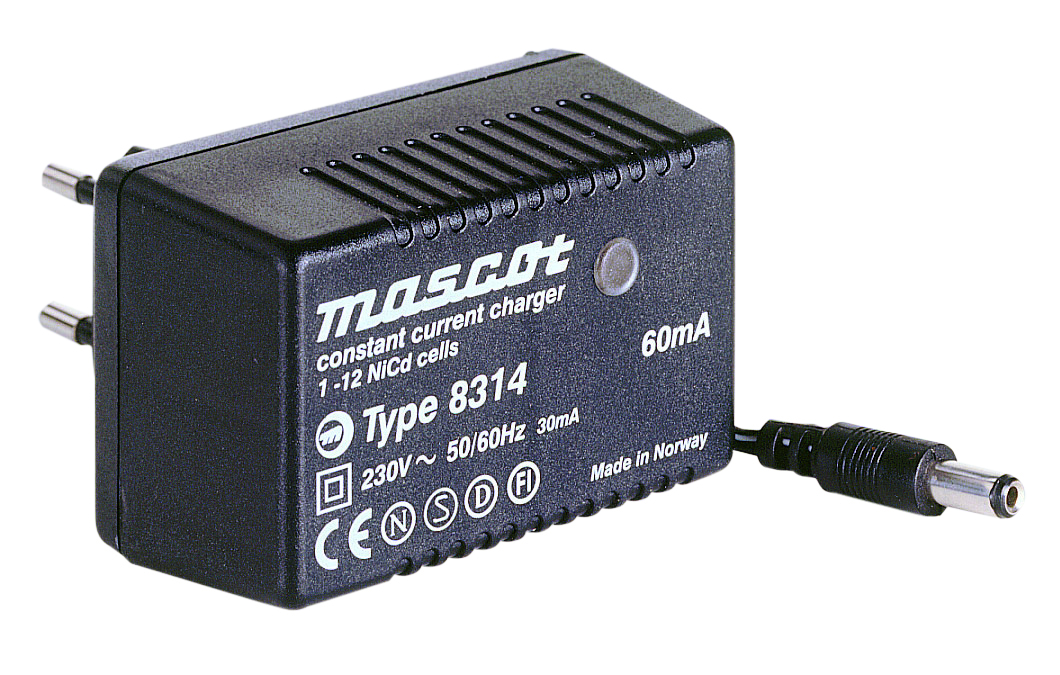
Mascot 8314 Constant Current Charger 1-12 Cell/100mA for NiMH/NiCd Battery -Linear
£35.77 + VAT£42.92 Inc. VATFrequently asked
- Do I really need a linear supply for amateur radio, or will a modern switch-mode unit do?
- On HF (especially below 14 MHz where the natural noise floor is high anyway) a well-filtered switch-mode supply is usually fine. On the higher HF bands and on weak-signal VHF/UHF you can sometimes hear the switching artefacts - a faint hash or whistle that moves with the band. If you operate WSPR, FT8 or weak-signal CW where every dB counts, the Mascot 8421 and 2083 linear ranges remove all doubt. They cost more per watt and run hotter, but the receive floor is as quiet as the antenna allows.
- What current rating do I need for a 100W HF rig?
- The published transmit draw for most 100W HF transceivers is around 20–22A on SSB peaks and 18–20A on CW. Pick a supply rated for 25A continuous to keep volt-drop under load to well under 0.5V, which protects the radio's internal ALC and PA bias. A 30A supply gives comfortable headroom and lets you drive a small linear amplifier or an external ATU without sag.
- I run a 24V solar/marine system at home. Can I power a 13.8V rig from it?
- Yes - that is exactly what the Mascot 9970 (24V → 13.8V regulated DC/DC, 276W) is for. It gives you a clean 13.8V rail derived from a 24V battery bank without taking the rig's negative through your house earth. Size it for around 1.4× your transceiver's peak transmit current to allow for the conversion margin.
- Can I float a backup SLA battery in parallel with the PSU?
- Yes, with a few caveats. Use a regulated 13.8V PSU and a float-capable SLA charger like the Mascot 2040 or 4040 - they are designed to sit indefinitely at the correct float voltage (around 13.6–13.8V) without overcharging. Add a Schottky diode or a dedicated power-management box between the PSU and the battery so that one can fail without dragging the other down.
- Which charger for handheld NiMH packs?
- The Mascot 8314 is a constant-current linear charger that comes in 15 mA, 30 mA, 45 mA, 60 mA, 80 mA and 100 mA versions covering 1–12 cells in series. Pick the current that matches roughly C/10 of the pack capacity for an overnight charge, or C/5 for a faster turnaround. For larger 2–6 cell packs the Mascot 2115 (1.3 A, programmable) cuts charge time and includes delta-V termination.