
Linear and switch-mode bench supplies for test & R&D
A lab bench needs supplies that are accurate, well-regulated, protected against the inevitable accidental shorts, and quiet enough not to contaminate sensitive measurements. The Mascot linear range is exactly the right tool for analogue, RF and low-noise prototyping work: the 8421 (36W, switchable 5–15V or 12–30V), 6823 (5V/2A, 6–12V/1A and 12–24V/0.5A linear variants) and 8937 (5–24V, 18W) give you adjustable bench rails with cleaner output than any switching unit can match. For higher-current digital prototyping where ripple matters less, the standard switch-mode Mascot range gives you 12V or 24V at 100W and up at a fraction of the size and weight. Pair either with a current-limited bench supply and a dummy load and you have a complete characterisation setup.
What to look for
- Tight regulation under load step - pick linear for the lowest noise, switch-mode for the highest current density
- Adjustable output voltage where the bench work requires it (8421 / 6823 / 8937 variants)
- Current limit you can actually rely on - Mascot supplies fold back on overload and recover automatically
- Low ripple for analogue / RF prototyping - linear models keep ripple in the millivolt range
- Sensible front-panel connectors (snap connectors or open-lead leads that you can terminate to your needs)
- Quiet, fanless operation on the linear range - important in an open-plan lab
Recommended Mascot Models
Curated from our UK stock for test & lab bench use. Need help picking? Call 01189 795319 or request a quote.
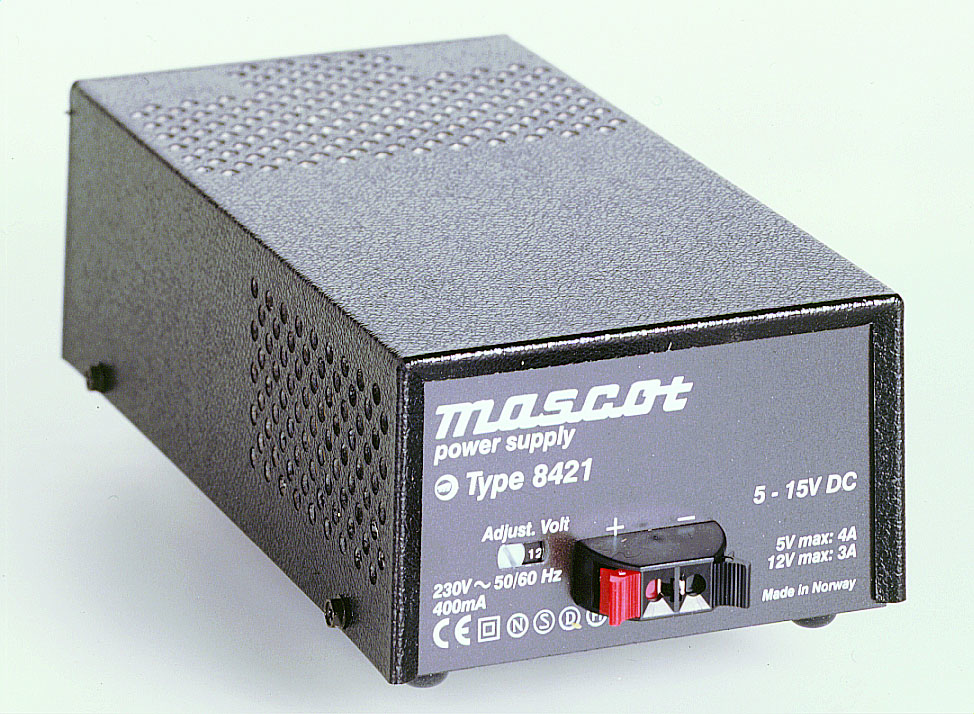
Mascot 8421 5V-15V DC, 36W AC/DC Linear power supply with fixed EU mains cord and unterminated DC Cable
£120.67 + VAT£144.80 Inc. VAT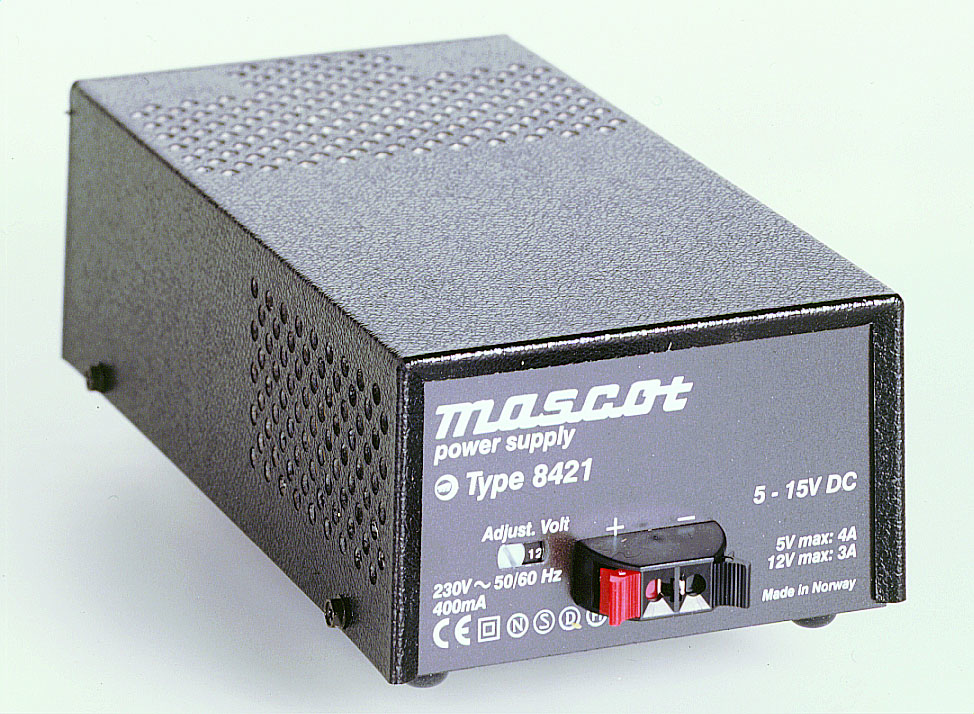
Mascot 8421 12V-30V DC, 36W AC/DC Linear power supply with fixed EU mains cord and unterminated DC Cable
£120.67 + VAT£144.80 Inc. VAT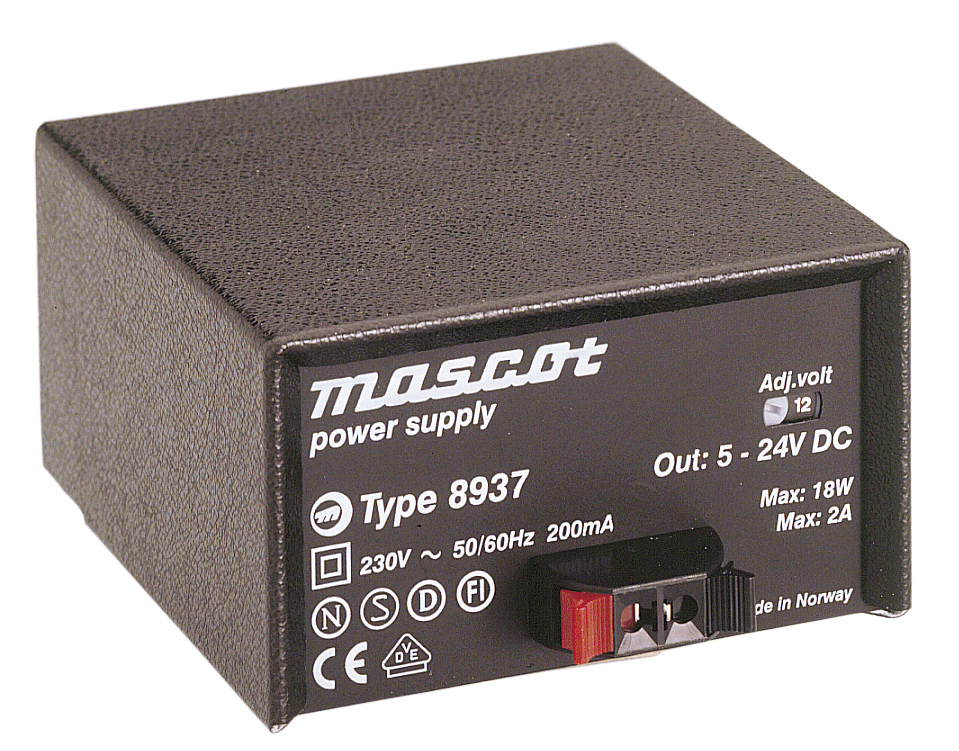
Mascot 8937 5-24V DC, 18W AC/DC Linear power supply with fixed EU mains cord and snap connectors
£89.57 + VAT£107.48 Inc. VAT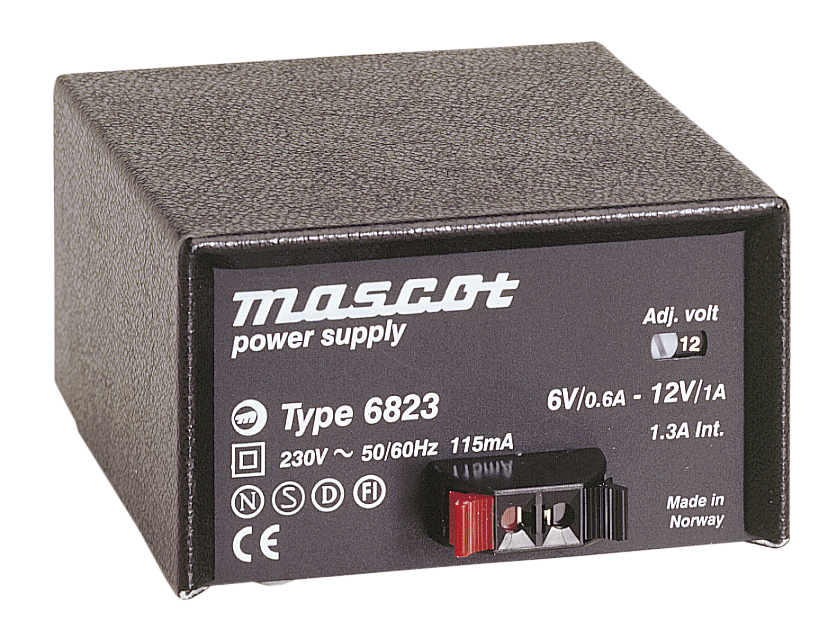
Mascot 6823 12V-24V DC 0.5A AC/DC Linear power supply with fixed EU power cord and snap connectors
£83.19 + VAT£99.83 Inc. VAT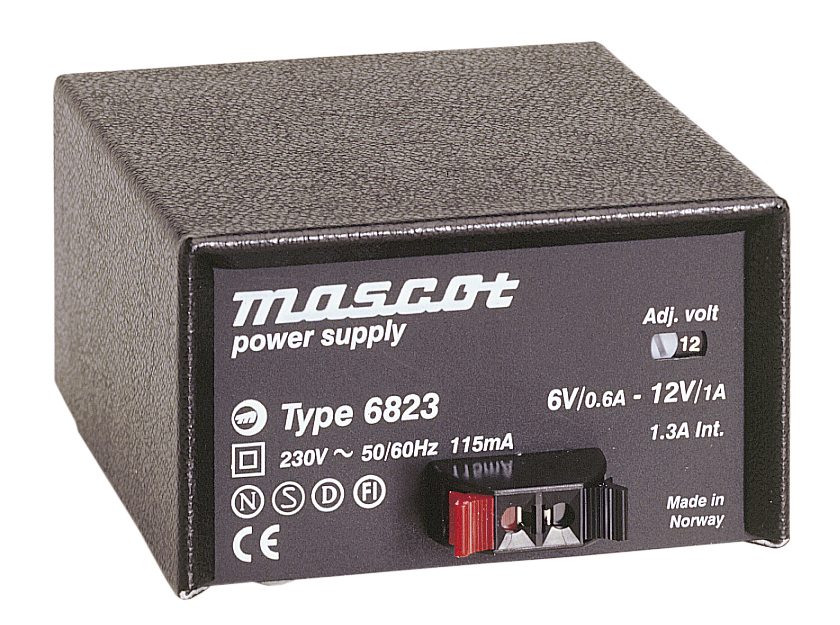
Mascot 6823 6V-12V DC 1A AC/DC Linear power supply with fixed EU power cord and unterminated DC cable
£80.76 + VAT£96.91 Inc. VATFrequently asked
- Do I need a programmable supply for production test?
- Only if your test script needs to sweep voltage or current as part of the qualification. For most R&D benches a fixed-output linear or switch-mode supply with a clean current limit is enough - and an order of magnitude cheaper than a programmable bench unit. The Mascot 8421 and 8937 ranges give you switchable / adjustable output without the cost of a programmable interface.
- Linear or switch-mode for a digital prototype?
- Switch-mode is fine for almost all digital work - the supply ripple sits well below the noise margin of any 3.3V or 5V CMOS family. Reach for linear when you're driving an ADC front-end, an RF receiver, an audio prototype, or anything where you'll be measuring microvolts on a scope and don't want to chase switching artefacts.
- Why are the 8421 and 8937 listed in two voltage ranges?
- Same chassis, different secondary winding - the 8421 ships as either 5–15V or 12–30V (both 36W) so you pick the range that brackets your target voltage. Keeping the voltage range narrow lets the linear regulator drop less voltage at full current, which keeps efficiency up and case temperature down.
- Can the supply tolerate a dead short on the output?
- Yes - every Mascot bench supply is short-circuit protected with automatic recovery. A short pulls the supply into fold-back current limit; remove the short and the supply recovers without a power cycle. It's exactly the behaviour you want when you're prodding a prototype with a scope probe.