
Motorhome & Caravan power systems
A modern motorhome electrical system juggles three energy sources - 230V hookup at site, the alternator while you drive, and the leisure battery (or batteries) when you're off-grid. Getting the three to cooperate without flattening the starter battery, cooking the leisure bank or browning out the kettle takes the right mix of charger, DC/DC converter and inverter. The Mascot range covers all three: 2040/2041 and 4040 hookup chargers for SLA, AGM and LiFePO4 leisure banks; 9970 and 8662/9261 DC/DC converters to keep a sensitive 12V rail (TV, satellite receiver, CPAP, fridge electronics) stable when the leisure battery sags to 11.8V under load; and the 2284 / 2285 / 2286 / 2287 pure sine-wave inverter family from 150W to 1000W for laptops, microwaves and induction kit. Every inverter is offered in both 12V and 24V input variants and with UK or EU output sockets - pick the version that matches your install rather than reaching for an adaptor.
What to look for
- Hookup-mode AC charger sized to 10–20% of the leisure bank (a 100 Ah bank wants a 10–20 A charger; a 200 Ah bank wants 20–40 A)
- 3-stage charging that drops to a true float when the bank is full - so you can leave the van plugged in for weeks
- DC/DC converter between the leisure battery and any sensitive 12V loads, to hold the rail at 13.5–13.8V even when the battery dips under load
- Pure sine wave inverter for anything with a switching power supply: laptops, TVs, microwaves, CPAP, induction hobs, modern fridges
- Inverter rated at roughly 1.3× the steady-state load you intend to run (and check surge handling for motors)
- Low standby / quiescent draw - a 0.5 A standby drain pulls 12 Ah a day from a sleeping van
Recommended Mascot Models
Curated from our UK stock for motorhome & caravan use. Need help picking? Call 01189 795319 or request a quote.
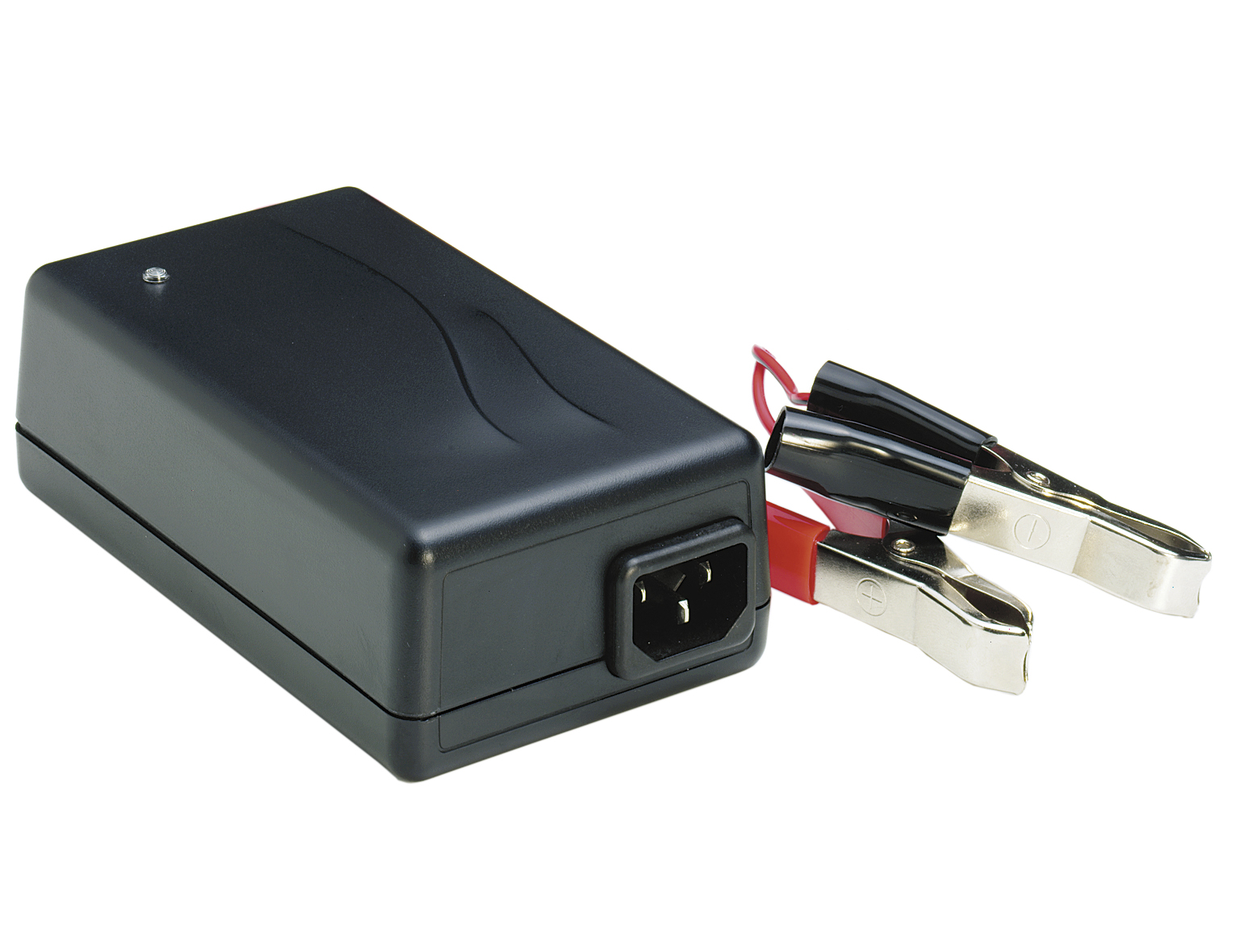
Mascot 2040 12V/4A 3-Step SLA Battery Charger with timer
£82.10 + VAT£98.52 Inc. VAT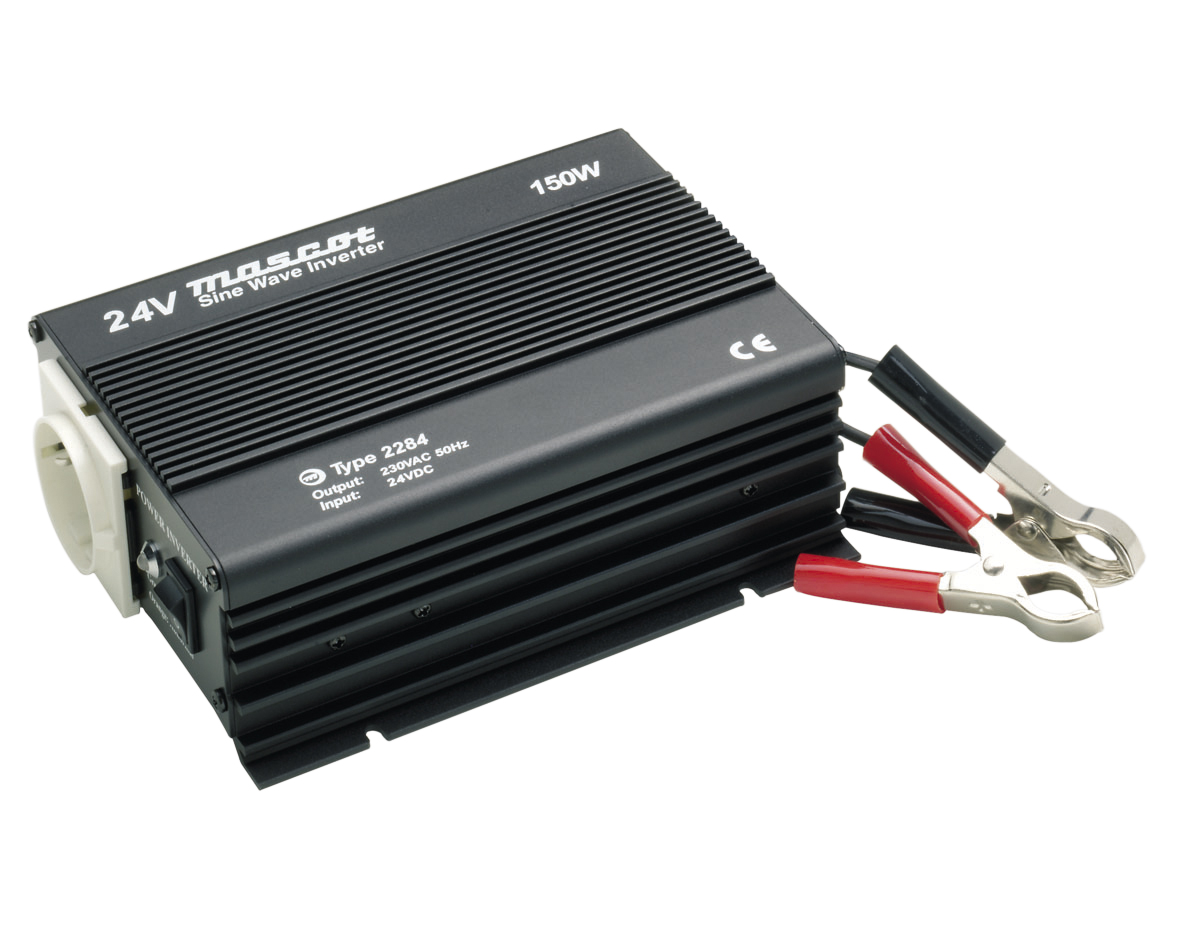
Mascot 2284 150W 12V DC to 230V AC Inverter with UK Socket/Battery Clips and Pure sine wave output
£222.51 + VAT£267.01 Inc. VAT
Mascot 2285 300W 12V DC to 230V AC Inverter with EU Socket/Terminal Blocks and Pure sine wave output
£256.61 + VAT£307.93 Inc. VAT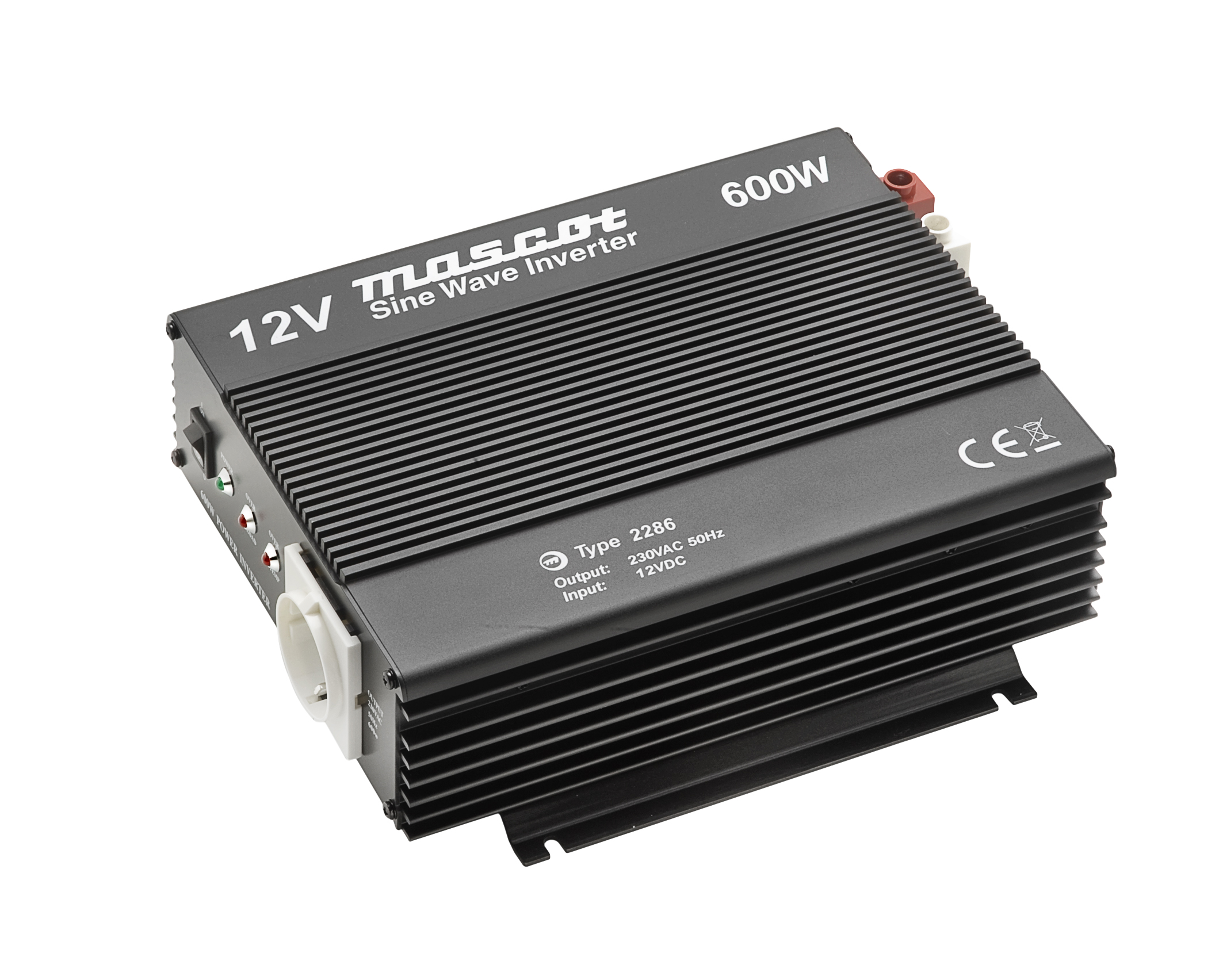
Mascot 2286 600W 12V DC to 230V AC Inverter with EU Socket/Terminal Blocks and Pure sine wave output
£491.93 + VAT£590.32 Inc. VAT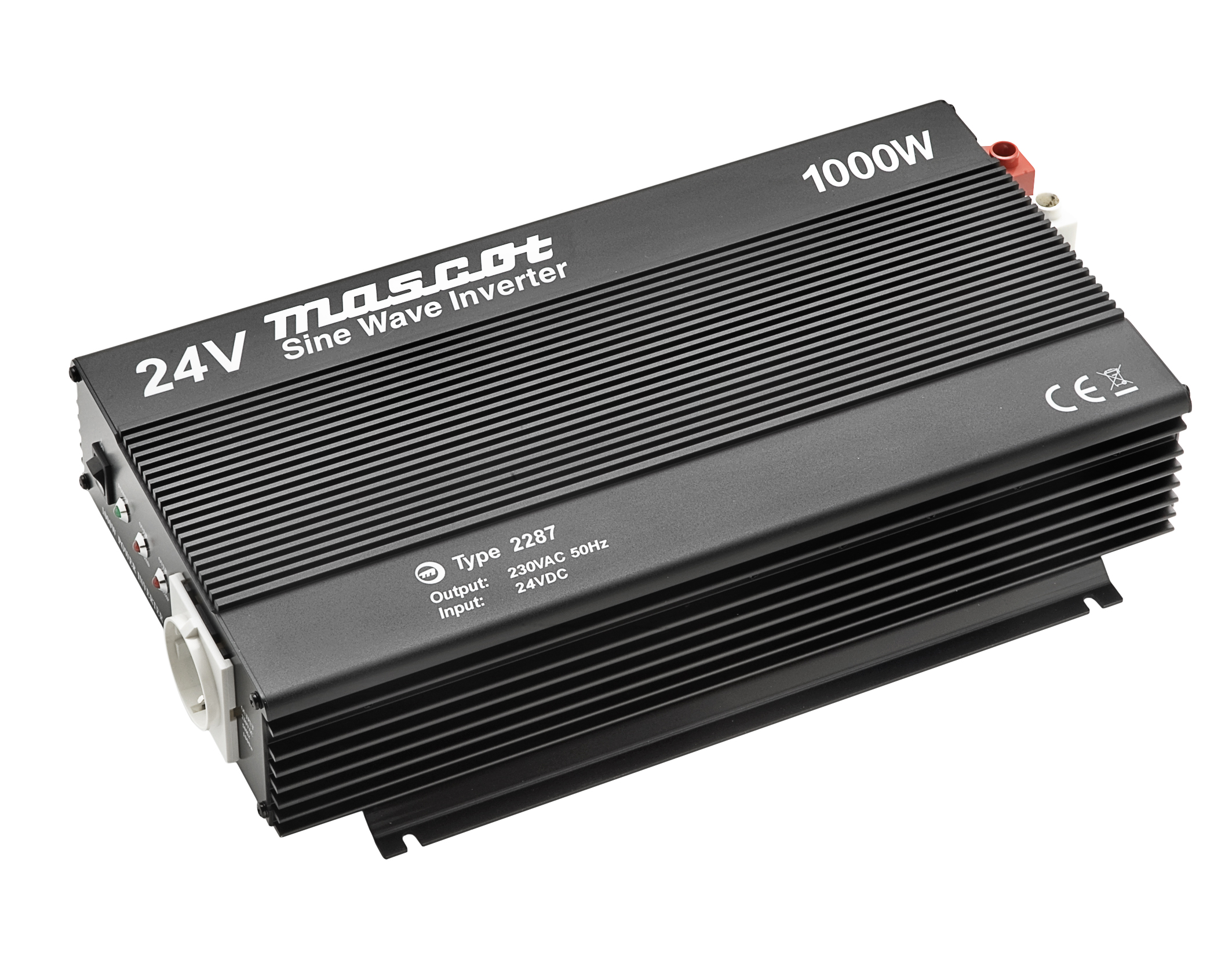
Mascot 2287 1000W 12V DC to 230V AC Inverter with a UK Socket for the output and terminal blocks for the input with a Pure sine wave output
£983.86 + VAT£1180.63 Inc. VAT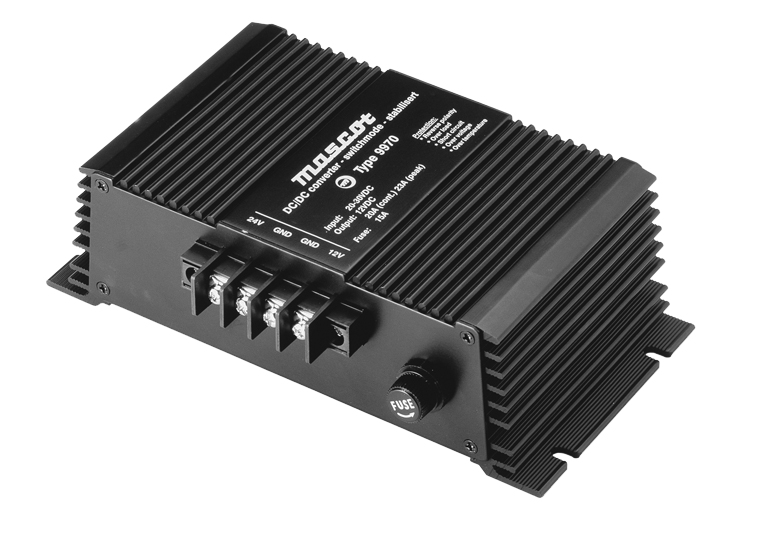
Mascot 9970 276W 24V/13.8V Switch mode DC/DC converter with a Regulated output
£160.90 + VAT£193.08 Inc. VAT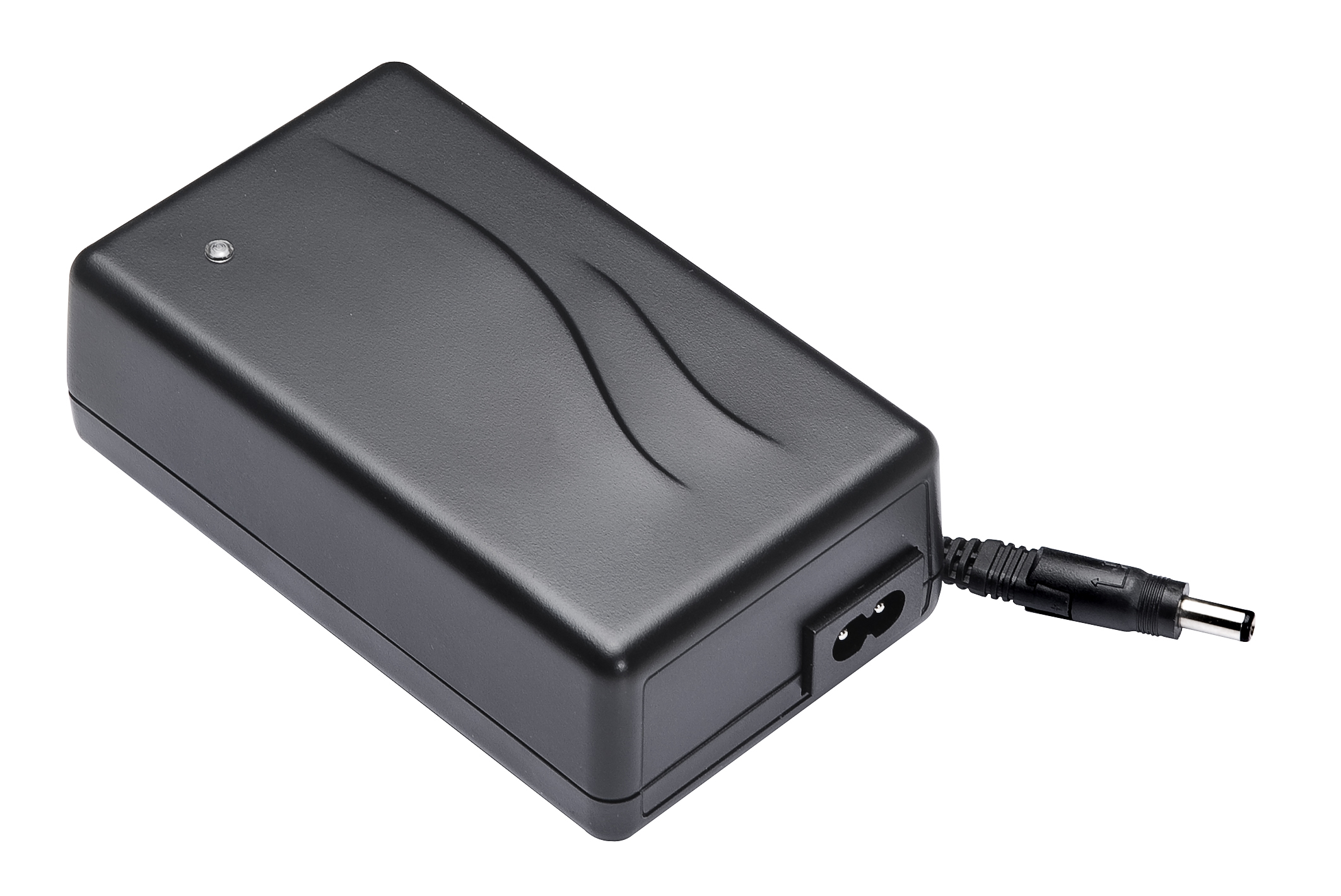
Mascot 2440LiFe 4 Cell / 4A LiFePO4 3-Step Battery Charger with current detection
£101.58 + VAT£121.90 Inc. VATFrequently asked
- Modified vs pure sine wave inverter - does it actually matter?
- Yes, for almost everything you'd plug into a motorhome. Modified-sine (stepped square) inverters cost less but cause hum and inefficiency in any device with a switching power supply - laptops, TVs, CPAP machines, modern fridges, induction tops, variable-speed power tools. The only safe use case is simple resistive loads (filament bulbs, basic heating elements). The Mascot 2284 / 2285 / 2286 / 2287 family is pure sine wave throughout and runs the full range of domestic kit cleanly.
- What size inverter do I need?
- Add up your steady-state load (a kettle is ~2200W, a microwave ~800W draw at the wall, a laptop ~80W, a CPAP ~50W) and pick the next size up. Don't run a 1000W kettle through a 1000W inverter - pick 1300W+ to cope with the cold-element inrush. For a typical 'laptop + TV + occasional toaster' van the 300W or 600W 2285 / 2286 is plenty; reach for the 1000W 2287 if you want to run a microwave.
- Do I need a DC/DC converter as well as a battery?
- Useful if you run sensitive 12V kit - the leisure battery may sit at 12.1V under heavy load and that's below the cut-off of some satellite receivers, CPAP machines and TVs. The Mascot 9970 (24V → 13.8V, 276W) is a clean way to derive a stable 13.8V rail from a 24V bank; the 8662 / 9261 linear converters do the same job with even lower noise where you have rack space.
- Can I leave the van on hookup all winter?
- With the Mascot 2040 / 4040 SLA chargers, yes - they drop to a true float voltage once the bank is full and will sit there indefinitely. For LiFePO4 leisure batteries the 2440 / 4040 LiFePO4 range terminates the charge and only restarts when the BMS calls for it, which is exactly what lithium chemistry wants. Add a basic mains timer if you only want to top up for a few hours a day.